
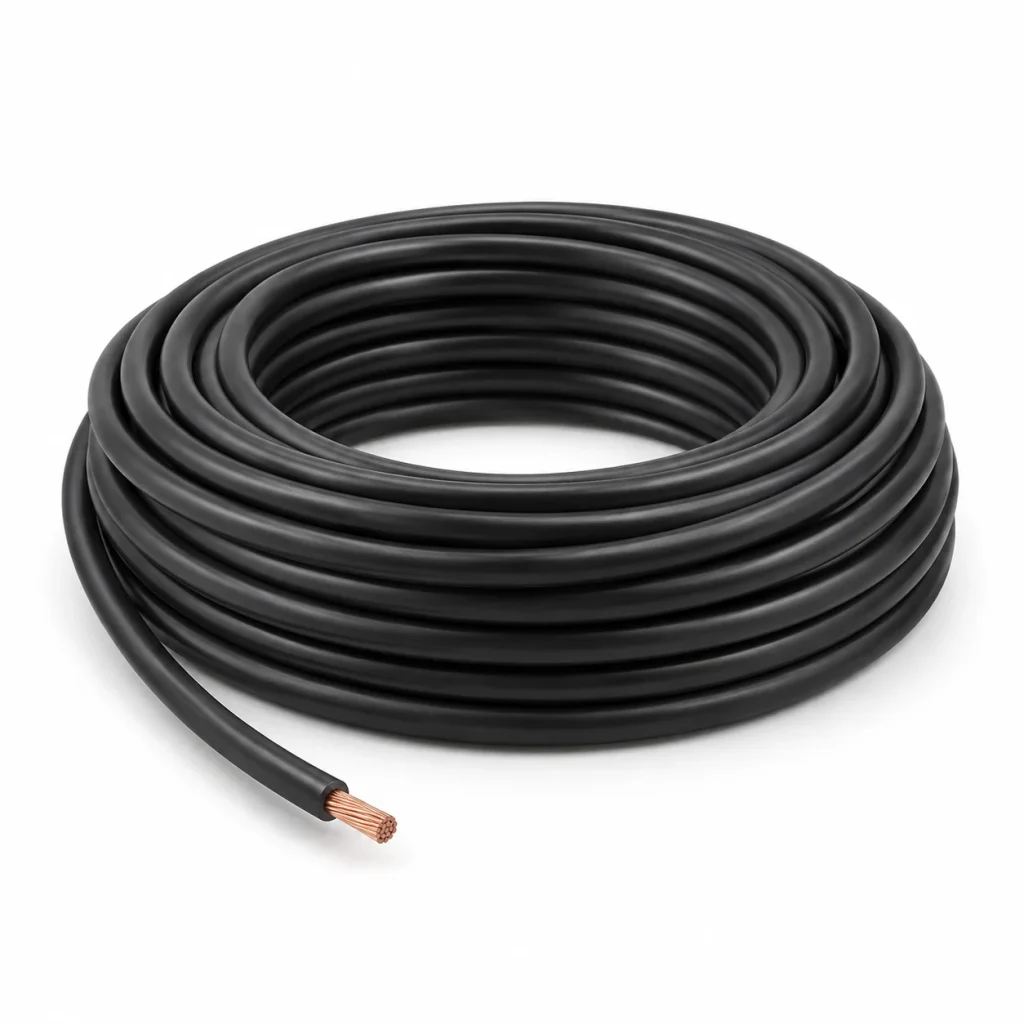
To answer "How much wire or cable do I need?", first define what you are measuring. Route length, cable length and the combined length of separate single-core wires are different quantities. A useful purchasing list separates model, size, color or circuit identifier, quantity and individual cut lengths.
Start with the route drawing
For each circuit, mark the origin and destination on the drawing, then measure the actual conduit, tray or duct route. The straight-line distance is not necessarily the cable route. Record horizontal runs, rises, drops and panel entries separately to avoid omissions and double counting. Without an installation drawing, label the result as a preliminary estimate and retain the route assumptions.
Cable length versus total wire length
In a teaching example, a 10-meter route needs three separate conductors of equal length. The base single-core wire quantity is 30 meters in total; record each color separately. If the design instead uses one three-core cable on the same route, the base cable quantity is 10 meters. This example illustrates measurement units only; the circuit design determines conductor count and size.
Prepare a worksheet you can check
| Teaching example | Route | Measurement unit | Base quantity |
|---|---|---|---|
| A | 10 meters; three separate wires | Meters of wire | 10 meters of each conductor; 30 meters total |
| B | 18 meters; one multicore cable | Meters of cable | 18 m |
| C | Two independent routes of 12 and 8 meters, using the same model | Cable length and individual cut lengths | 20 meters total; two separate pieces |
Do not combine quantities for different models or sizes. Even for one model, "20 meters" does not tell the supplier that you need separate 12-meter and 8-meter pieces. State cut lengths separately. A shared duct may be measured once physically, but each circuit's cable has its own quantity.
Add termination and reserve lengths explicitly
After the base quantity, identify extra length for terminations, panels, boxes and the design reserve. Do not apply one fixed percentage to every project; the reason and amount must be checkable. If an allowance is already included in the route measurement, do not add it again. Intermediate joints and limits on continuous lengths must also be considered in the design.
Can floor area tell you how much wire to buy?
Floor area alone does not determine circuit count, panel distance, connection points or installation method. Two properties of equal area can require different wire quantities. For a preliminary estimate, collect room counts, connection points, dedicated circuits, floors and panel locations, then give a range. Replace estimates with route drawings and measured quantities before placing a final order.
From measured lengths to coils and drums
Confirm actual coil or drum lengths for the model with the supplier; packaging varies between products. If only full packs are available, calculate pack count from each model's quantity and the actual pack length. Agree separately on cutting availability, minimum order, cutting charges and piece lengths. A calculated quantity does not confirm stock or commit the supplier to delivery.
Final checks before buying
- Is each line measured in meters of wire or meters of cable?
- Have vertical runs and extra lengths been counted only once?
- Are size, color, model code and individual cut lengths specified?
- Does the reserve quantity have a clear basis?
- Has the selected size been checked for current, voltage drop and protection?
Length measurement determines purchase quantity; cross-section selection is a separate task. On long routes, measured length can inform a voltage-drop check, but length alone does not determine the correct cable size.