
Quick selection reference
and wire and cable inquiries
نامگذاری کابل، وزن تقریبی، فهرست اطلاعات لازم برای استعلام و محاسبههای رایج.

Understanding power cable designations
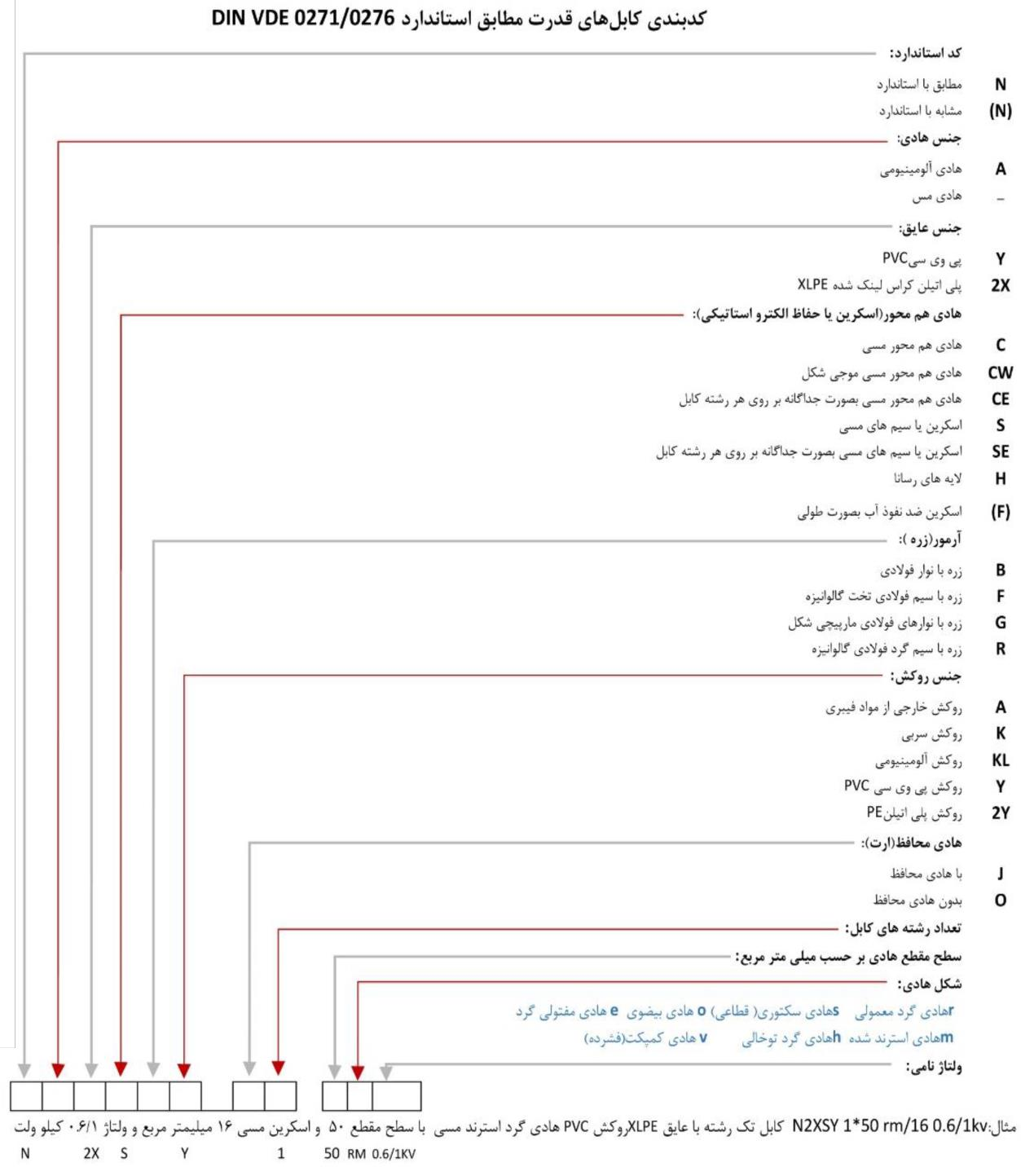
نامگذاری کابل قدرت بر پایهٔ DIN VDE 0271/0276 است. جنس هادی، عایق، شیلد، آرمور، روکش، تعداد رشته، سطح مقطع، شکل هادی و ولتاژ نامی اجزای معرفیشدهٔ این نامگذاریاند.
To read a code, the presence of each letter must be interpreted alongside the full construction and the datasheet of that same model.
- N: the standard designation mark in the diagram
- A: aluminum conductor; the copper conductor is introduced without this letter in the relevant section
- Y and 2X: PVC and XLPE insulation in the insulation section
- B and R: examples of tape armor and round steel wire in the diagram
- RM, SM and the other conductor shapes are introduced at the bottom of the diagram
 Zoom
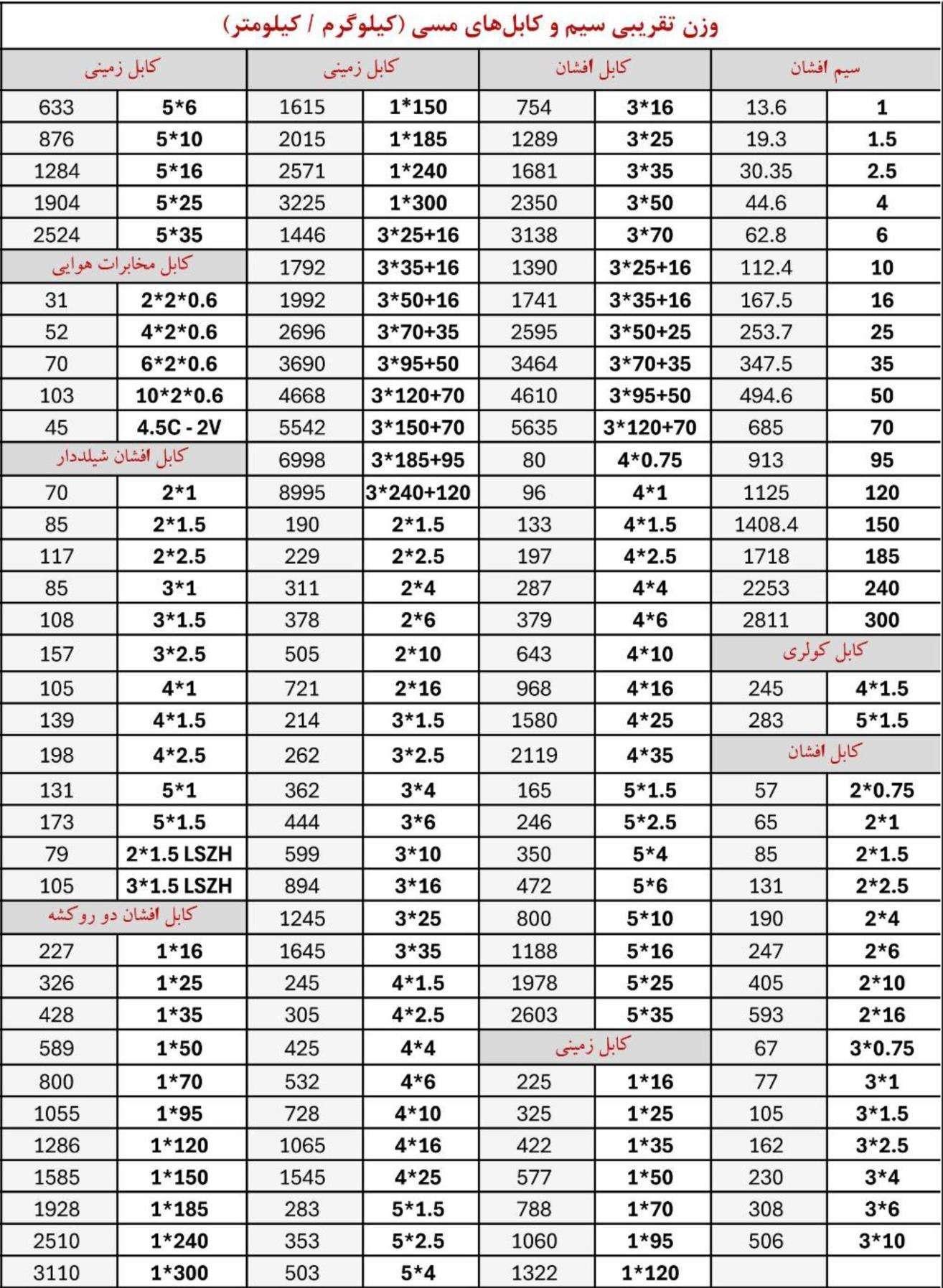
Approximate weight table for copper wire and cable
The catalog appendix gives approximate weights of copper wire and cable in kilograms per kilometer. The table covers flexible wire, flexible cable, underground, air-conditioner, aerial telecom, shielded and double-sheathed cable.
These numbers are approximate references. The definitive weight of an order depends on the model, the manufacturer, the construction and the production specifications.
- Table unit: kilograms per kilometer
- For comparison, choose the same cable type and the same number of cores or pairs
- Conductor size, insulation, sheath and shield all affect the final weight
 Zoom
Information needed for selection and inquiry
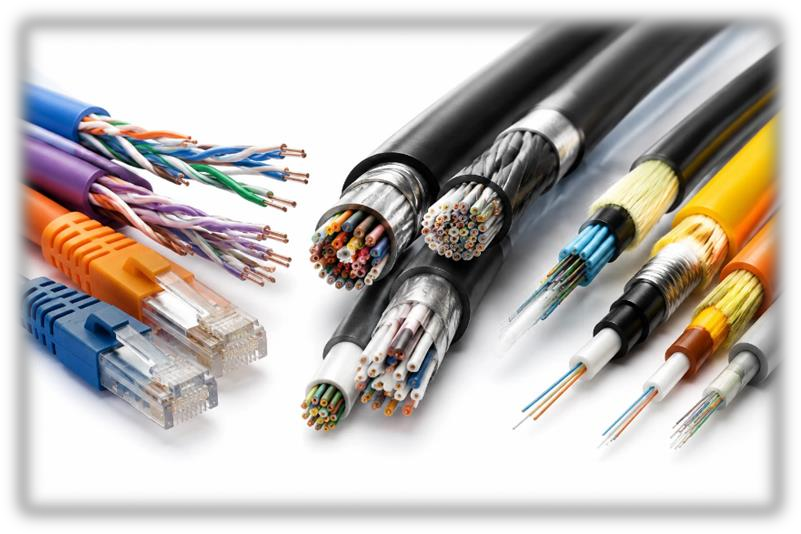
Prepare the cable name or code, the application, the number of cores or pairs, the cross-section or conductor diameter, the installation conditions and the order length. For optical cable, the fiber count and type are needed too.
Barad reviews the specifications, the manufacturer's documents, availability, price and delivery terms based on this information.
- Electrical wire and cable: conductor type, cross-section, number of strands and rated voltage
- Copper telecom: pair count, conductor diameter and installation route
- Network cable: transmission category and shield construction
- Optical fiber: fiber count, fiber type and installation method
- Specialty cable: environmental conditions, tests and required documents
 Zoom
Calculation and selection for a specific application
Each topic is explained in a practical article with examples and sources.
Not sure which model suits you?
Tell us the application and the project conditions; we'll review the model, the documents and availability together.