

Strictly speaking, solid cable has a single-wire conductor; but not all rigid or underground cables are single-wire. For an order, read the conductor class from the model's specifications.
What exactly does solid mean?
A Class 1 conductor is made of a single wire. By contrast, a Class 2 conductor is stranded and is generally used for fixed installation. In market language both may be called "solid"; this loose usage can cause mistakes in ordering, connection and expectations of the cable's flexibility.
Also, a multi-core cable can have a single-wire conductor in each core. So "being multi-core" and "each conductor being multi-stranded" are two separate properties. In a purchase request, make the core count, conductor class and cross-section clear in three parts.
Reference for this section: Eland Cables: conductor construction and classes 1, 2, 5 and 6
Why not look only at the apparent diameter?
In describing a conductor, the nominal cross-section and the resistance limits matter. The diameter over the insulation is not the diameter of the copper; even the diameter of the set of strands, without knowing the construction, is not a complete basis for judging a product. The IEC 60228 standard introduces the requirements for the conductors of power cables and insulated wires.
This standard alone does not set all the specifications of the insulation, sheath, voltage and installation environment. For those, the documents for the cable type and that model's datasheet must be checked. The general phrase "to the standard", without a number and a relevant scope, is not complete information for an order.
Reference for this section: IEC 60228:2023: introduction to the standard for conductors of insulated cables
The difference from flexible in a practical decision
| Topics | A Class 1 or 2 conductor in a fixed-installation cable | A flexible conductor in a suitable cable |
|---|---|---|
| Conductor shape | Solid, or relatively rigid multi-strand | Finer strands |
| Bending and movement | The installation limits and bend radius must be observed | More flexibility; continuous movement needs a purpose-made model |
| Connection | The terminal must suit the conductor's material and class | Preparing and securing the strands per the manufacturer's instruction |
| current capacity | From the construction table and installation method | From the construction table and installation method |
| Burial or moisture | Only with confirmation of the product's full construction | Only with confirmation of the product's full construction |
This comparison is not a quality ranking. Even two cables with the same conductor class may have different sheaths and standards for their use. Choosing on one property does not remove the project's other checks.
Is solid cable always underground cable?
No. Being underground relates to whether the whole product is permitted for the intended installation method. The material and thickness of the layers, mechanical protection, moisture conditions and installation instruction must be clear. A conductor being single-wire does not give permission for direct burial in soil.
On the other hand, a fixed-installation cable may have a Class 2 conductor. In different sizes and constructions, the conductor's shape may also change. Match the family name to the class and shape of the conductor of that size, and don't use a picture of one model to judge another model.
What matters in installation and ordering?
- Extract the model title and the conductor class from the datasheet.
- Match the bend radius and the pulling method to the maker's limits.
- Tell whoever chooses the terminal and the lug the conductor's material and class.
- Record the type of route, the length and the environmental conditions before buying.
- Check current, voltage drop and protection independently of the title "solid".
If a proforma says "solid cable" but the project asked for a specific class, get a written explanation before confirming the purchase. helps you organize the questions in your order.
Bending and running the route with a solid conductor
A solid conductor is stiffer and tires sooner under repeated bending or constant vibration. The larger the cross-section, the more this matters.
- Design the route with fewer and gentler bends.
- Before buying, read the minimum bend radius for that model.
- For routes with vibration or movement, review a more flexible model with sales.
- Terminate the conductor end with a tool and terminal suited to a rigid conductor.
Questions to answer before buying
- Is the route fixed, or might it see movement and vibration?
- Will the cable be buried, in conduit, on a tray or surface-mounted?
- Is the destination terminal suitable for a rigid conductor?
- Are the cross-section and conductor class written explicitly in the model's specifications?
- Does the length of each coil or reel suit your route?
Frequently asked questions
Is semi-flexible cable the same as flexible?
No; semi-flexible usually refers to a Class 2 conductor and is not the same as a flexible Class 5 conductor.
Does a stiffer cable carry more current?
Stiffness is not a measure of current capacity; the thermal conditions and the model's construction matter.
Can a fixed-installation cable be used for a moving part?
Only if the maker of the cable and of the equipment has confirmed the use. Don't put a fixed-installation cable in place of a cable made for movement on your own initiative.
Products related to this topic
These products are presented for studying construction and specifications; they are not a size selection or an approval for use in a specific circuit.
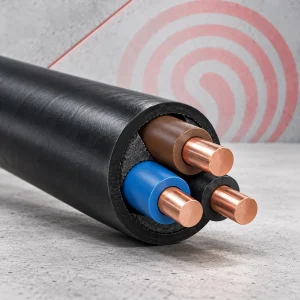
Underground cable 3x2.5 Khorasan Electric (Afsharnejad)
A sample from the same field for comparing construction, size and specifications.
490,000 toman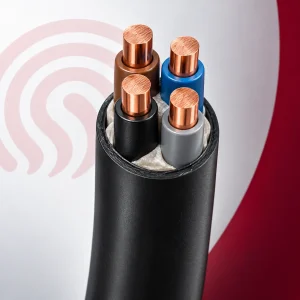
Underground cable 4x6 Khorasan Electric (Afsharnejad)
A sample from the same field for comparing construction, size and specifications.
1,355,000 toman