

System integration becomes tangible to a customer when ordering, delivering the service and following up a fault share coordinated information. This article separates the archived news from an explanation of these concepts.
The exact publication date of this news item is not confirmed in the information available.
One request several systems
In Barad's archived news, the Digital Star is introduced as a program to integrate the services and systems of the Telecommunication Company of Iran. The opening of an IT innovation center and the coordination of operational and commercial systems are the main points of the news. The names OSS, BSS, billing and customer relationship management, or CRM, also appear in the text.
To understand the subject, consider a request to change a service. This request is tied to ordering, delivery, support and billing. If the information in these parts is not coordinated, following up becomes difficult for the customer. This example explains the integration problem; it is not a report on the performance of any specific system.
News of a plan differs from a report of results
The archived text explains the project's stated goal. To know which parts were carried out and what the result was, we need a performance report and the date it went into service.
For this reason, the word "new" in the original news should be read at the time it was published. This piece is kept to review that news and is not an assessment of the current quality of the telecom company's services.
Getting to know OSS BSS and CRM through an example
Suppose a customer submits a request to increase their connection capacity. The commercial side must know which service was ordered, what the contract says and how the invoice changes. On the operations side, network capacity, the resources needed and the activation status matter.
BSS refers to business support systems and OSS to operations support systems. CRM relates to customer relationship management. The exact boundary between these systems depends on each organization's architecture; the aim of this example is to understand the roles, not to describe the implementation details of the Digital Star project.
From placing an order to delivery: what should be recorded?
- A clear request: Record the address, type of service, requested capacity and a way to contact the customer.
- Feasibility check: Determine the network resources and whether a site visit or new equipment is needed.
- Referral and follow-up: Know who is responsible for each stage and why a request is held up.
- Testing and handover: The result of the work and the information support needs go back to the file.
This path is a teaching example. To judge how a real project was carried out, we need independent reports and operating data.
Physical infrastructure also needs correct information
A software system cannot replace correct connections, port numbering and recording of rack changes. When a patch cord is moved, recording the old and new port numbers helps the maintenance team find the route again. In each route's file you can keep the origin, destination, cable type and date of the last change.
To understand this part, see the pages on and . These items relate to the article through documentation and network installation; they are not OSS or BSS software.
Frequently asked questions
Does this article confirm the success of the Digital Star project?
No. The archived text describes the stated goals and does not have enough data to assess the result or the current quality of service.
Does buying network equipment solve a systems integration problem?
No. Processes, data, software interfaces and teams' responsibilities must also be coordinated. Physical equipment is only one layer of the infrastructure.
Products related to this topic
These items are presented for studying the physical layer of the network; supplying or implementing Digital Star systems is not attributed to Barad.
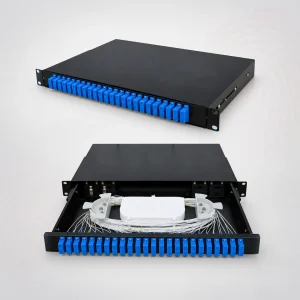
fiber optic patch panel
To get to know how optical connections are organized and numbered; part of infrastructure documentation.
Price: ask sales