Skip to main content Skip to content
Barad — wire, cable and communication equipment supplyAdvice and price inquiries: 02121000001
Power cables · Telecommunications · Optical fiberSelect a model | Request a quotation | Contact sales
A Barad course

Fiber-optic basics and transmission parameters

Beginner6 learning sections

To read the specifications of an optical link, we start from power, loss and wavelength. This course is for people who want to learn the technical language of network design and installation.

The outline on this page is a proposal; the final program is announced before registration.

Optical fiber technology fundamentals and parameters

Who this course is for

New telecom specialists, technical sales staff and network technicians

Before you join

General familiarity with networks; you do not need any experience with a fusion splicer to begin.

What the program covers

  • Explaining the main parameters of an optical link
  • A first-pass loss budget calculation
  • Telling passive and active components apart on a network diagram
Learning path

Proposed course outline

The proposed program is laid out in six sections. Ask us about the details of the exercises and the tools you will need before you join.

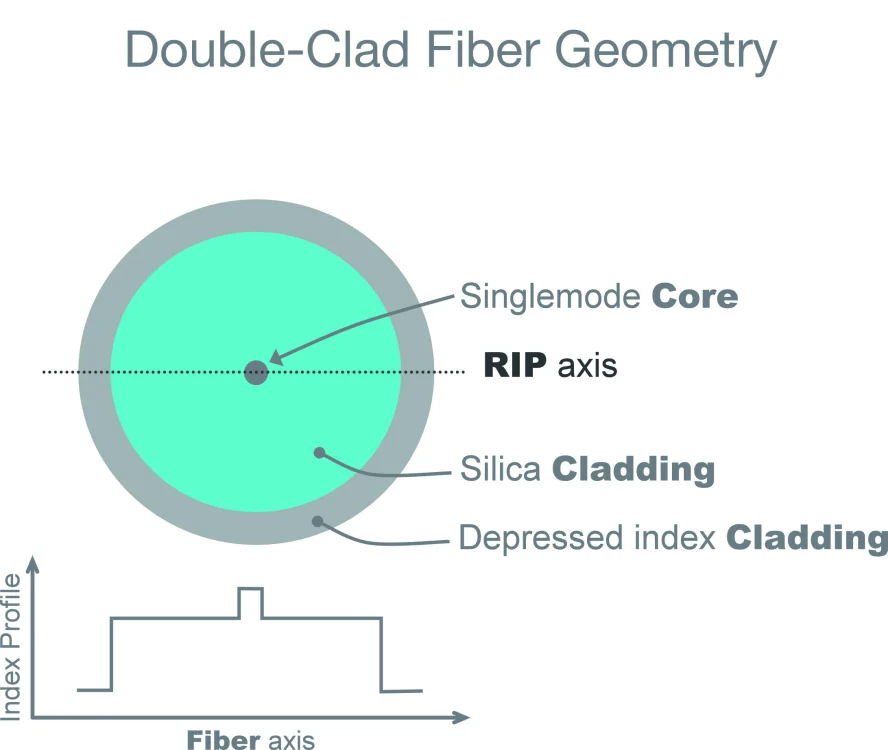
01Light and fiber structure
  • What roles do the core, cladding and protective coating play?
  • Total internal reflection and the idea of an acceptance angle
  • Comparing how single-mode and multimode fiber guide light
02Wavelength and transmission windows
  • What wavelength means, and how the 850, 1310 and 1550 nm regions differ
  • Choosing a wavelength based on the fiber and the link equipment
  • Reading the transmitter and receiver operating range from a datasheet
03Power and loss in a link
  • The difference between dB and dBm, and converting power to a logarithmic scale
  • Cable attenuation, connector loss and splice loss
  • Calculating total loss and a safety margin with a worked example
04Dispersion and transmission capacity
  • Modal and chromatic dispersion with an easy-to-follow example
  • How link length, bandwidth and data rate relate
  • What PMD is and where it matters in sensitive links
05Parts of an optical network
  • Cable, pigtail, patch cord, adapter and patch panel
  • Understanding the role of an SFP and the optical interface in active equipment
  • Drawing a simple path from transmitter to receiver
06Safety and reading documents
  • The danger of looking straight into an optical port, and a safe way to check
  • Collecting fiber offcuts and keeping the work area clean
  • Extracting the main parameters from a sample datasheet

Suggested exercise

For a sample link, draw the components, calculate the path loss, and list the information missing from the datasheet in a checklist.

Before you join

Is this outline the final program?

This page is a proposed plan for the course content. The actual outline, the way it is delivered and the details of the exercises are agreed with participants before registration.

How are the time, cost and venue set?

To get this information, submit a coordination request for this course. The date, cost, instructor and venue are announced once the program is confirmed.

Does the course include hands-on practice?

This plan proposes one practical exercise. Running it as a workshop and using equipment depends on the facilities and the final program.

Further reading

FOA technical reference for understanding and building an optical network ↗
Contact salesRequest a quotation

How can we help?

Request a quotation Price list Contact sales Online support